Friday, April 20, 2007

Eurofascism- the growth of the extreme right in Fortress Europe


Eurofascism- the growth of the extreme right in Fortress Europe

By Joe Carolan. Racism and Anti Racism Module. Masters of Equality April 2004.

Introduction

What the far right deny- The Holocaust murdered:

Six million Jews

Two million Poles

520,000 Roma

473,000 Russian Prisoners of War

100,000 disabled or mentally ill people

Tens of thousands of socialists, communists, gay people,

trade unionists and others

In 1945, the world was shocked by the discovery of Hitler’s “Final Solution” for the Jewish people, the Holocaust of the Concentration Camps of Auschwitz, Dachau, Belsen and Treblinka. The slogan “Never Again!” became a rallying cry, yet nearly sixty years to the day, racist far right parties are increasing their vote and influence throughout Europe, and have actually become coalition partners in the governments of Italy and Austria. The parties of the extreme right have learned how to court respectability, trading in the jackboot for the black suit. However, beneath this polished media friendly exterior lies an assault on the rights of immigrants, asylum seekers and people of colour, a strategy which has increasingly set the agenda for mainstream political parties to respond to. This essay seeks to first examine the rise of these racist far right parties in their national contexts, and how they use fears and myths around race, culture, immigration, Islamophobia and economic crisis to recruit and grow. It will also examine different anti-racist strategies to counter their growth, identifying certain strengths and weaknesses of political approaches in different nations. For, in many ways, the success of the far right is partly attributable to the failure of the left to take a united and determined anti racist and pro immigrant stand- this essay will take a critical look at how social democratic and Labour parties in many European countries have buckled under the pressure from the far right and conceded the need for tighter immigration controls and a Fortress Europe.

The Rise of the Far Right

Between 1945 and the late 1970s, the European far right was confined to the margins of political life, barely registering electoral percentages in the single digits. This began to change with the impact of global recession in the late seventies, which saw millions thrown on the dole queues. When the economies of Europe had been expanding in the sixties, demand for immigrant labour had been insatiable, and major countries such as France, Britain and West Germany encouraged either guest workers from poorer countries or immigrants from their old ex-colonies to help build up the ”motherland”. Now, in times of recession, these immigrants proved a useful scapegoat for problems that were caused by economic crisis. Thus, for a new emergent far right, shortages in jobs and housing were not caused by the system, but by immigration. This period saw the growth of parties such as the Front National in France, and the National Front in Britain.

“The ideas put forward by racism and fascism seem, to at least some of the working class, to offer solutions to the consequences of economic crisis, to bad housing, unemployment and falling living standards. The pressures that lead people towards racism and fascism are real material pressures. To destroy the ideas, we must remove their material base”

C. Sparks, Never Again! The Hows and Whys of Stopping Fascism (London, Bookmarks, 1980), p91

Following the collapse of Stalinism across Europe in the period 1989 to 1992, confusion about the way forward for the left was accompanied by resurgent nationalisms in the East. The disintegration of the Eastern Bloc regimes also had consequences for the sizable Communist Parties in France and Italy, leading to splits and confusion amongst their working class supporters. This disorientation on the left allowed a vacuum to open up and be filled by the hard right

Dave Renton, in his 1999 work “Fascism- Theory and Practice” (Pluto Press, London), traces the origins of the modern breakthrough of the far right back to 1984.

“The decisive turning point came with the European elections in 1984. The French Front National benefited from favourable media coverage, which followed its successful electoral alliance with the conservative right in the local elections…

Jean-Marie Le Pen was already a nationally prominent figure, but the FN’s unprecedented success came as a shock. The party won 11 per cent of the vote with ten members elected as Euro MPs. The FN became respectable and moved into the political mainstream”

Since that time, Le Pen shocked the world when he came second place in France’s Presidential elections in May of 2002, taking over 17.9% of the national vote. In the recent local elections of March 2004, it held a core vote of 13.8%. Le Pen pioneered the way for similar political formations in Belgium, Britain, Austria, Italy and Germany, with both the Allianze Nazionale and the Freedom Party joining coalition governments in Italy and Austria respectively.

Who are the extreme right in Europe?

ITALY: Gianfranco Fini is the leader of Italy’s Allianze Nazionale, a self described “post fascist” party that transformed itself from the unashamedly fascist Movimento Sociale Italiano in 1992. Fifteen months before the June 2001 elections, Fini organised the MSI celebration of the 70th anniversary of Mussolini’s march on Rome, with fascist salutes and marching groups chanting Mussolini’s slogans “Believe, Obey, Fight!” It won over 12% of the vote, its manifesto called for a halt to all immigration and for a defence of Italian culture. Joining with the separatist Northern League and billionaire Silvio Berlusconi’s Forza Italia (Forward Italy), it formed its first coalition government in 1994 and again in 2001. Fini’s success was of huge historic significance, as argued by Martin Lee-

“Although short lived, the participation of the MSI had huge implications, not just for Italy but for all of Europe. It broke a long standing anti-fascist taboo and established a precedent for conservative politicians, who had previously shunned alliances with the racist ultra right. A momentous political threshold had been crossed, which made governing coalitions with neo-fascists disguised as right wing populists more acceptable…in the future”. M. Lee, The Beast Reawakens (London: Little, Brown and Company, 1997), p374.

AUSTRIA: Across the Alps another fascist found his way to government.

Jorg Haider’s Freedom Party (FPO) got a massive 27% of Austria’s national vote in October of 1999, in a campaign of naked xenophobia that saw FPO posters promising that “We guarantee to stop the foreigner’s takeover”.

In the election, Haider praised Hitler’s “orderly employment” policy- and claimed that the Concentration camps were mere “punishment” camps for “communists and criminals”. He called an assembly of ex- concentration camp Waffen SS “honourable men”, with his chief cultural advisor Andreas Mulzer claiming that

“The myth of the six million was institutionalised by the greatest show trial in history at Nuremberg”. On election, the government closed many multicultural arts projects and venues, and immigration and asylum procedures were made more difficult. The Freedom Party’s rhetoric constantly equates immigrants and asylum seekers with criminality- when entering government, Haider claimed that there were “far too many illegal immigrants, criminals and drug dealers- none of them have a place here in Austria. This has to be our policy- to eliminate them uncompromisingly” (Haider quotes from C. Bambery, Stopping the Nazi Menace (London: Larkham P+P, 2001), p37.)

FRANCE: “Trois millions chomagers, trois millions immigres”, three million unemployed, three million immigrants, is one of the Front National’s rallying cries, with clear echoes of Hitler’s slogan “Six million unemployed, six million Jews”. Le Pen was prosecuted when in September 1987 he called the Holocaust “a mere detail of history”, and when asked to explain just how he would deport millions of Arabs and Africans living in France, laughed and said “in trains if necessary”. Although yet to participate in national government, the FN has come to power in many local councils, such as in the town of Vitrolles in 1997. It immediately fired 37 youth workers, then physically attacked and closed the town’s multicultural centre. Controversially, it offered a £500 birth bonus for “French” (meaning white) babies, which the first three families refused before the national government declared it illegal. The FN will not house, educate or medically treat immigrants- it calls for state provision for French people only. Recently it has led the campaign against the Hijab which saw huge sections of the French Left confused, giving in to a dangerous Anti-Muslim backlash of Islamophobia. Hassan Mahamdallie provides a detailed history of Le Pen and the FN in his paper Racism, Fascism and the Left (International Socialism Journal 95, London, July 2002).

GERMANY: In Germany, the fragmentation of the German Democratic Republic was followed by a Reunification that saw many of the Eastern state owned industries privatised or shut down. Unemployment soared to the present figure of four million, and many young people in the former East Germany looked to the extreme right in desperation. In August 1993, the world was shocked when Neo Nazi skinheads burned a Turkish hostel, killing four children. Since then, dozens of far right groups have emerged, but nationally the German far right movement is still ideologically divided. The two biggest groups, the NPD or National Democrats and the Republikaner Party, scored 2 million votes in the Euro elections in 1989. However, the subsequent rise in violent street attacks on black and Jewish people was halted by massive street demonstrations, which has put these groups on the defensive since.

BELGIUM: In the Belgian local elections of October 2000, the far right Vlaams Blok (VB) scored over 33% of the vote in Antwerp, becoming the biggest party in Mechelen, and gaining double figures across Flanders. They demand “Independence and an end to immigration. We need immediate repatriation for those who do not integrate with Belgian culture”. Quoted by C. Bambery in Stopping the Nazi Menace, p40.

BRITAIN: In June 2001, the British National Party got 12,000 votes in the Northern English town of Oldham, with its leader Nick Griffin getting elected on the local council with 6552 votes, 16% of the total vote.In nearby Burnley, the BNP gained another council seat with 4151 votes- 11% of the poll. That night, the home of Oldham’s Asian mayor was firebombed, and street fighting Nazis attacked Asian shops and houses. When local people attempted to defend themselves, the media attacked them as “Asian rioters”, with New Labour’s Home Secretary David Blunkett blaming the BNP’s growth on young Asians “refusing to integrate with British culture”. The BNP targets areas of deprivation and poverty with immigrant and asylum seeker populations, with the slogans “Rights for Whites”and “Britain for the British”. It now has 6 councillors in Britain and is currently organising branches in the North of Ireland. Its leader Nick Griffin claims-

“The asylum seeker issue has been great for us. We have had a phenomenal growth in membership. It has been quite fun to watch government ministers and Tories play the race card in far cruder terms than we would ever use. This issue legitimises us” (quoted from Anti Nazi League website at www.anl.org.uk).

Ineffective Anti Racist Strategies

Such growth in openly racist parties provides a challenge for the left and the anti racist movement- clearly some strategies are not succeeding if these parties are getting sizable votes and building an electoral base in many deprived communities. Traditionally, it was the European social democratic and labour parties who were the champions of the poor and immigrant workers. However, in most EU countries, these parties have ditched their socialist founding principles, adapting themselves to the market friendly politics of neo-liberalism and Fortress Europe. Working class voters in Austria, France, Britain and Germany feel betrayed by “their” party that seems to care more about the needs of big business than it does the unemployed. Many of these parties respond to the growth of the far right by accepting the “fact” that stricter immigration controls are needed. Nonna Mayer attacks what she calls ‘the political cowardice of mainstream parties’-

“Both left and right wing governments have borrowed from Le Pen’s rhetoric by implementing tougher immigration policies. However, this strategy proved to be counter productive… Neither the expulsion of illegal immigrants via chartered planes, laws restricting entry of foreigners to France nor the reform of the nationality code in 1993 have stopped the Front National’s progression. As Le Pen likes to say- In the long run it will bring more supporters- people prefer the original to the copy”

Nonna Mayer- New Politics of the Right: Neo-Populist Movements in Established Democracies (New York, 1998)

Currently, Ireland faces a divisive referendum that threatens to change our citizenship laws from ones based on land to ones based on blood. Several years ago, only Aine Ni Chonaill’s extremist Immigration Control Platform advocated this position. However, the ICP has succeeded by setting the agenda for Michael Mc Dowell’s Progressive Democrats. The danger lies that this referendum will now legitimise the politics of race, as have similar strategies of accommodation in continental Europe.

Similarly, most of the large reformist parties on the left accept immigration controls as a “necessity”. Here they buy into the concept of the nation state as being the fundamental political unit that a movement can engage with. In this era of corporate led globalisation, many anti capitalist groups argue that transnationally there is free movement for capital but not for people. Thus, in many countries it is organisations of the radical and revolutionary left who are active in campaigning against ALL immigration controls under the slogan “No Borders, No Frontiers- Immigrants are Welcome Here”.

The French group Sans Papiers (Without papers) is a militant asylum seekers group that fights deportations through Church occupations, and played a leading role in arguing for the “No Borders” position adopted by the European Social Forum in Paris in November 2003. In Ireland this position is now being argued during the Mayday European Presidency and the run up to Mc Dowell’s referendum by groups such as Globalise Resistance, Another Europe is Possible, the Grassroots Network and the Campaign against the Racist Referendum. They argue that immigrants are not a drain but a boost to the economies they come to, and that economic problems such as unemployment or health and housing waiting lists existed long before black or Asian faces were a common sight on our city streets. (See websites for respective positions- www.freewebs.com/globalise, www.freewebs.com/anothereuropeispossible )

Beyond Moralism- anti racism on the streets

There is also a marked failure of national government sponsored campaigns that stress the Universalism of humanity, of the “One race, human race” variety. Liberal anti racists believe that a combination of anti racist education, multicultural events and legal protections will be sufficient to counter the growth of the far right. There is a danger that by JUST focusing on these methods, they leave unchanged and unchallenged the desperate economic inequalities that allow racism and fascism to emerge.

Here there is a marked difference in strategies pursued on “street level” by liberal and radical anti racists. In France, the main anti racist group is SOS Racisme, whose slogan is “Ne touche pas mon ami” (Don’t touch my friend). The group had some success in organising carnivals and was supported generously by the French Socialist Party. However, this party when in government implemented policies that led to huge poverty and joblessness in the city ghettoes. Education and carnivals weren’t enough- the Front National argued that unemployment was caused by immigration and filled the ideological vacuum. Radicals argue that anti racists need to show that unemployment is caused by crisis in economic system- if the Nazis are rats then we need to catch the rats, but also deal with the sewers that produce them.

Liberals and radicals also disagree on whether fascists should have the right to organise meetings, marches and rallies. It must be remembered that historically, Fascists have used democracy to destroy it. In confronting groups such as the BNP or the National Front, there is often a huge debate between “Freedom of speech” liberals and “No Platform for Fascists” radicals. It must be remembered that these groups are not just racist- in their own words, they seek to “control the streets” (Josef Goebbels) and destroy trade unions, the parties of the left, liberals, all independent organisations.

Historically, the greatest failure of the left was in Germany in 1933, where the combined votes and membership for the Social Democrats and the Communists were still larger than Hitler’s Nazi Party. Revolutionaries such as Leon Trotsky; himself a Jew, argued that there should be a united front of the left parties to organise mass strikes, counter marches and physical resistance against Hitler, yet the left remained fatally divided. Hitler, in his Mein Kampf preface, argued that “Only one thing could have stopped our movement- if our adversaries had, from the first day, smashed our nucleus”. Instead it was the left who were smashed by his Stormtroopers.

Today in France, SOS Racisme does not confront Le Pen’s marches, organising rallies and carnivals miles away from where his rallies occur.

The lessons of unity were remembered in Britain, where in Cable Street in London in1936, Mosley’s anti-Semitic British Union of Fascists was beaten off the streets. Jews joined with Gentiles, Communists with the Labour Party, trade unionists with the unemployed against the common enemy. The left won the economic and political arguments about unemployment and poverty and succeeded in curtailing a fascist movement in Britain.

This unity was remembered again in 1977, at the battle of Lewisham, where the then influential National Front had its march cut in two by a United Front of left parties, trade unions, black, Asian and Jewish groups. Calling itself the Anti Nazi League, it argued that the key to defeating the racists and fascists was mass activity-in addition to the street counter demonstrations, “Rock Against Racism” united punks with reggae musicians, crating a militant anti racist culture epitomised by the ska two tone movement against the National Front. It could be argued that the successful ANL campaign in the late 1970s helped to develop the vibrant multicultural society Britain is today. (see “History” section at the Anti Nazi League website).

Conclusion

It is difficult in an article of some three thousand words to do this topic justice.

An anti racist movement for the 21st century is desperately needed, especially in the face of the growth of the far right. This movement needs to organise mass activities such as carnivals and demonstrations, but it must also take up the political and economic arguments around which the far right are mobilising. Myths about asylum seekers, racist media and Holocaust Denial must also be continuously challenged.

Most importantly, the lessons and warnings from history must be remembered and relearned- fascism is a danger to us all, not just to its scapegoats-

First they came for the Jews-

I did not speak out because I was not a Jew

Then they came for the Communists-

I did not speak out because I was not a Communist

Then they came for the trade unionists-

I did not speak out because I was not a trade unionist

Last they came for me- and there was no one left to speak out for me.

Paster Niemoller, victim of Nazis

Bibliography

Colin Sparks, Never Again! The Hows and Whys of Stopping Fascism (London, Bookmarks, 1980)

Nonna Mayer- New Politics of the Right: Neo-Populist Movements in Established Democracies (New York, 1998)

Chris Bambery, Stopping the Nazi Menace (London: Larkham P+P, 2001)

Dave Renton, Fascism- Theory and Practice (Pluto Press, London, 1999)

Martin Lee, The Beast Reawakens (London: Little, Brown and Company, 1997)

Hassan Mahamdallie et al, Racism, Fascism and the Left

(International Socialism Journal 95, London, July 2002)

Anti Nazi League website at www.anl.org.uk

Another Europe website at www.freewebs.com/anothereuropeispossible

Friday, March 30, 2007

A Marxist Muslim Alliance? A response to the Different Euphemisms For Power


Sahar's article the Different Euphemisms For Power, passionately rails against Western, "Orientalist" misrepresentations of Muslims as a homogenous group, either as demonic bloodthirsty terrorists or as victims to be pitied. However, she makes sweeping statements about the support socialists have given the anti imperialist struggles in the Lebanon, Palestine , Iraq and throughout the Arab and Muslim world, criticisms that Socialist Worker, as the only named group, would like to respond to.

1) All the left require is the token Muslim who will be mere background for their protest down Queen Street and the like - just in case their argument needs further reinforcement and legitimacy. Importantly, 'Muslim' is treated as homogenous.

First off, we do not see our Muslim brothers and sisters as homogenous tokens. The Muslim world, like the Western world, is divided into rich and poor, and the working classes of Cairo , Jakarta and Baghdad are some of the biggest in the world. These countries all have indigenous socialist and trade union movements, such as the Peoples Democratic Party of Indonesia, the Lebanese Communist Party and the Revolutionary Socialist Organisation of Egypt, who are involved in fights for human rights and huge strike movements in their predominantly Muslim societies.

(2) Furthermore, Western ideas like Marxism, Enlightenment principles and so on are portrayed as 'universal' and dictate the narrative. In the end, we have both perceptions depicting the struggles of Muslims in so called 'universal' concepts and norms which are inherently Eurocentric.

If it is a Universalistic concept to believe that the world is divided into poor workers and the tiny rich elite minority who benefit from their exploitation (whether that society is Muslim or Western), and that we need to organise to fight these elites for workers and human rights, then yes, socialists plead guilty!
The argument about how economy and society should be controlled democratically is one that rages within Muslim society itself. Salma Yaqoob, an eloquent young woman widely tipped to be the next MP in Birmingham for the radical socialist RESPECT coalition, spoke poignantly about this issue-
"The presentation of Muslims as one reactionary bloc has to be challenged. The Muslim community is a mosaic of different communities, experiences and viewpoints. When I stood as a RESPECT candidate in Birmingham, the bulk of my political opponents were Muslims. A Liberal Democrat Muslim candidate, an independent Muslim candidate and a Conservative Muslim candidate all stood against me. I was also the one most attacked by Muslim extremists going around with leaflets at the mosque and in vans with loudspeakers saying I was no longer a Muslim because I work with atheists and this is haram."
"So I find myself in the curious position of having more in common with atheist, socialist activists than my own Muslim brothers and sisters. But for me it's an expression of what I understand to be Islamic notions of justice. If you want to call it socialist internationalism and I call it Islamic notions of brotherhood and sisterhood, I don't care- as long as it means that we work in solidarity with those who are oppressed around the world. That's why I'm proud to be one of the founders of RESPECT. We stand for an alternative to the politics of imperialism and neo-liberalism."

(3) Additionally, the socialist left denigrate the struggles of the Muslim world to nothing but a class struggle. It sees the disenfranchised and impoverished as means to its own end. Therefore, the interdependency of history, political complexity, cultural dynamics and ongoing human struggle for liberation is reduced by being solely represented through a socialist ideological framework, simplified and made superficial - stripped of any narrative but a workers' struggle against capitalism. The different cultural context is removed, and so is the essence of identity for many of the region.

Socialists are not the crude reductionists that Sahar paints in her article. Socialists unconditionally support genuine anti imperialist movements throughout the world, be it Hizbollah's resistance to Israel's invasion of Lebanon last August, the Intifada in Palestine, the peoples of East Timor, Aceh and West Papua struggling against the Indonesian state, or the 800 year old struggle of the Irish people for self determination from England. None of these are class struggles- these are cases of small nations being oppressed by another imperial power, and socialists are opposed to all forms of oppression, not just in the workplace. We also believe that the defeat of our rulers armies abroad helps weaken their power at home- the Left launched massive social struggles for Civil Rights, Womens Rights and Trade Union rights on the back of the mass movement they built in solidarity with the Vietnamese people in the 1960s.

(4) Granted, the left-socialist agenda is not sinister like its counterpart.

Socialists would like to reclaim the word sinister, which comes from the Latin, Sinistra, meaning Left! But then again, just like the words Black, Muslim and Arab, dominant ruling class culture makes anything "left field" sinister! (LOL). However, it must be noted that not all socialists are homogenous either- Tony Blair and Stalin both laid claim to the name, but there are rivers of blood between the Stalinist dictatorships of Russia or the war loving Social Liberals of New Labour, and those of a genuine revolutionary socialist tradition. Even amongst revolutionary socialists, there is an argument, with Socialist Worker proudly on the side of Muslim people fighting Islamophobia in countries like Aotearoa and Britain, whilst other groups such as the LCR in France supporting the governments ban on the Hijab in schools and Universities. This meant that there was a gigantic anti war movement in the UK (with over two million people marching in London) that united Muslim and non Muslim in a new left movement, whilst immigrant youth in France saw the rise of Islamophobic far Right parties such as Le Pen's Front National, and fought on the streets whilst the radical left looked on impotently.

(5) However, both draw upon an Orientalist precedent that is seeping in racist and imperialist notions that disfigure representations of 'Muslim' in order to possess them. To own them. To direct them. To contain and therefore control them. Thereby both perceptions arrogantly assume they can speak for Muslims.

Sahar here draws on the work of world renowned writer Edward Said and his caricature of Marxism in his masterwork Orientalism. Among sections of the anti-imperialist movement there is still a degree of suspicion of Marxism, fed by the postmodernist, post-colonial academic currents of the 1980s and 1990s. The noted Indian historian Irfan Habib critiques this misrepresentation of Marx.-

On a preliminary page of his Orientalism, Edward Said puts two short quotations, the first of which is from Marx: "They cannot represent themselves; they must be represented." An innocent reader will surely assume that Marx is here implying that Oriental peoples are incapable of representing themselves, and so Europeans (better still, European Orientalists) must speak for them. And, indeed, on p21, quoting Marx's words in original German, Said explicitly furnishes this precise context for his words.

There is a double sense in which this use of the quotation is unethical and irresponsible. The quoted words are taken from a passage in Marx's Eighteenth Brumaire of Louis Bonaparte, where he speaks not of the position of Eastern peoples, but of the poverty-stricken smallholding peasants of France at a particular juncture in the mid-19th century. "Since these peasants could not unite, they were incapable of enforcing their class interest in their own name, whether through a parliament or through a convention. They cannot represent themselves, they must be represented. Their representative must at the same time appear as their master" (K Marx and F Engels, Selected Works, Moscow, 1950, vol I, p303).
Not only does Said thus coolly substitute eastern peoples for French peasants; by a sleight of hand he also converts Marx's word "representation", meaning political representation, into "depiction" (The Oriental people cannot depict themselves, and so the Orientalists representation does the job p21).

(6) So in the left case, Muslims are represented as silent, oppressed and victimised. They do not speak for themselves, because they are represented as such; they therefore need to be spoken for.

We also do not see Muslims as victims who need us to represent them. The comrades of Hizbollah and the Lebanese Communist Party fought arm in arm together against the Israeli invasion without our help. They defeated the fifth strongest army in the world. Socialists, however, see it as our international duty to organise protests and solidarity whenever people are under attack. Throughout the Western world, from London to Washington to Auckland , we have been at the centre of building broad, inclusive anti war movements that have helped undermine the support for war. Socialist Worker comrades argued hardest throughout the world for the Muslim community to be centrally involved in these anti war coalitions, against many pure secularists who wanted to marginalise them. These movements claimed the scalp of Aznar in Spain , Berlusconi in Italy, and have seriously damaged both Bush and Blair. Comrades in the Middle East can point to the fact that millions of Westerners marched against war and invasion, thus defeating the myth that this war was a Clash of Civilisations.

And it's not just the socialists of a 'Eurocentric' ilk who extended this practical solidarity. The socialist President of revolutionary Venezuela, Hugo Chavez, was the only head of state to expel the Israeli ambassador from his country at that time- no Arab or Muslim head of state did anything similar. His image hung beside Hizbollah's Nisrallah from thousands of lamp posts in Beirut and Southern Lebanon as the cluster bombs fell and the resistance raged. The emergence of the Bolivarian Revolution and the Latin American radical left demolishes the myth that socialism is the preserve of old, European white men. The Socialism of the 21st Century is currently led by a brown, indigenous Latin American from the Global South.

Here in Auckland, socialists such as Kane Forbes helped to form the Students for Justice in Palestine Chapter in Auckland Uni with Zaem Bakesh in the early days of the Intifada in 2000. Our members in the Residents Action Movement (RAM) are currently working with the Muslim community to respond against the despicable Islamphobia of Ian Wishart's Investigate magazine. We have marched together for Palestine , Lebanon and Iraq, and will be united on the streets if there are any attacks on Iran. We do not look on our Muslim comrades as victims, tokens, demons or others, but our brothers and sisters in the fight for peace and global justice.

Further reading:

The Prophet and the Proletariat by Chris Harman

Israel the Hijack State
by John Rose

Critical Notes on Edward Said
by Irfan Habib

La Haine Est Dans La Rue- Personal Thoughts on the French Autumn Intifada by Joe Carolan

Thursday, December 07, 2006

AVOIDING CARMAGEDDON


AVOIDING CARMAGEDDON

The Rise of the Climaction Movement

Joe Carolan

Icebergs floating off

the coast of Dunedin. Serious skin burn time down to a matter of minutes. Freak storms, citywide power cuts, massive traffic jams. Welcome to Carmaggedon, Aotearoa 2007!

The horrors facing the world as a result of Climate Change are becoming all too apparent, through films like An Inconvenient Truth. John Darroch’s blog Auckland’s Burning has some frightening descriptions of how Climate Change and a Peak Oil Crisis could trigger a System Collapse in Aotearoa-

As people begin to experience record high levels of unemployment and food shortages the country experiences a swing towards the right, rampant nationalism and racism are openly expressed by both the public and politicians. A highly right wing government is initially elected and rapidly cuts back on personal freedoms in the name of security- racism becomes ingrained in public policy.


New Zealand enters into a strategic pact with Australia and America and every attempt is made to continue our current consumption levels both of oil and other material goods. As part of our agreements with the states our army is placed on the front line in Arab and African nations with significant oil reserves. Our coal supply is almost solely exported to members of this alliance. The Kyoto protocol and all other such agreements are scrapped in favour of coal power generation, nuclear is also widely adopted.

While some people do start growing some of their own food it only produces a tiny amount of people’s daily requirements. When things get desperate this food is stolen by hungry neighbours and mobs of hungry unemployed start raiding those with resources. This isn’t helped by attempts to prevent rioting by nationalising all resources.

By attempting to sustain growth we use up all those resources we could have used for a transition to a sustainable culture. Eventually
Auckland is sacked by rioting youth, abandoned and weeds are left to grow through the pavement as office towers collapse. The country fragments into several warring factions with hundreds of thousands of boat people fleeing Australia and Asia forming raiding parties which move through the country looting and taking land.[1]

A Hobbesian war of all against all. Mad Max meets Sleeping Dogs. Barbarism, not Socialism…

The growing realisation that we need a fundamental system change, not just an electoral parliamentary party or a specialised direct action NGO focused on media stunts, is leading to the birth of a neo-eco movement. The problem with either parliamentary MPs or traditional eco-warrior models is that both rely on a small group of specialised professionals to incrementally lobby for change or reforms. Now you can lobby with a vote or lobby by lobbing a Molotov, but these approaches leave the system that is destroying the planet intact. There is room now for a new way, one that sees neither MPs nor specialised NGOs as saviours, but that looks to a mass people’s movement to stop climate change. This was the impetus around the formation of the Climaction group in Auckland.

Climaction was formed in early October, about a month before the International Day of Action on Climate Change on November 4th. Some groups and individuals who attended the first meeting in the Methodist Mission had worked well together on previous campaigns, testament to the fact that the Auckland radical left is light years ahead of some of the other cities on the planet in terms of respecting each others ideological differences but uniting in action around issues like Lebanon and Palestine, Youth Rates, union drives, the Lockout etc. But what was noticeable about that first meeting was the plethora of new faces- Climate Change is an issue that hundreds if not thousands of people out there will take action on. The challenge after the foundation meet was how to find and involve them.

We agreed on two major demands, one global and one local in focus. The first was for Free and Frequent Public Transport in the city, an achievable reform that would cut carbon emissions drastically in Auckland as well as improve the quality of people’s lives. This demand could be repeated in cities elsewhere. The second was to move Beyond Kyoto and to campaign for a 90% reduction in greenhouse gasses by 2030. Kyoto was never enough, merely a global parking ticket, but we were no longer going to waste our breath trying to get idiots like George Bush to ratify it. What was required was a mass movement committed to direct action- a Civil Rights Movement of our generation. Comrades like Martin Luther King had started small in the 60s, but by the end of that turbulent decade, had triggered a mighty force for racial equality that was unstoppable. With his example as an inspiration, we decided we would block Queen Street on November 4th, and went off to spread the word. It was time for the Carnival against Climate Change!

We had a wealth of experience in committed individual activists from organisations like Greenpeace, the Save Happy Valley campaign and the Green Party. Socialists from SW (and Andrew from the Workers Party) were joined by anarchists and autonomists from Radical Youth. We also looked to the trade union movement, and found some great Pasifika people around Fala Haulangi from the Service and Food Workers Union. Comrades from Unite, Solidarity, the Tramways Bus union and the NDU helped to build the Nov 4th Carnival. Radical Youth activists put up hundreds of posters around the city.

RECLAIMING QUEEN STREET

As Nov 4th approached, there was some increase in tensions around taking direct action. Some favoured a conspiratorial approach, thinking it a mistake to advertise where and when we would reclaim the streets. Others predicted that there would be a bloody riot and the whole thing would end in tears. Climaction, to its credit, held its nerve, and told people the time and place to get to. Hundreds of people turned up on the day, and the cops seeing their numbers and determination, conceded to Liaison steward Jo Mc Veagh about 5 minutes before we were due to reclaim the streets.

Those who favoured conspiratorial politics now accused organisers of making deals with the police, or being involved in purely symbolic politics. Jogrrl, a veteran of many’s an arrest for direct action, answers the critics-

I had been elected as Police Liaison by ClimAction in the week before the Carnival. A few days before it was on I phoned up and told them where and when we would reclaim the street. I didn’t ask permission – I simply told them what we were going to do. I made sure to emphasise that I wasn’t ‘in charge’ of the group because we’re pretty democratic, but that I had the role of police liaison on the day. Our plans were no secret to them, and they were pleased to have a contact point for the day.

So it was all out in the open, and everyone knew exactly what was going on. This meant that we got the hundreds of people out there on the day, and the police took a ‘low-key approach’ – those were their words!

Some people said that it was symbolic, and yeah it was - we weren’t under any illusion that we would close the street indefinitely. But we did what we set out to do – we closed the street.

A lot of people there hadn’t been involved in any sort of civil disobedience, so that’s why we wanted something “soft” – so that we would include as many people as possible, and so that we didn’t end up having a scuffle with the cops. People won’t come back if it degenerates into fisticuffs, but I think that overall, with the Peoples Assembly, the ice, the stalls - people had a positive experience, and that gives us something to build on. Maybe we can do something ‘harder’ next time…?

Malcolm France, Climaction and Happy Valley super activist-

Police permission was never asked for; we were going to reclaim the streets with or without their consent. The next Climaction Carnival will be bigger, and that is the key, the numbers. They can’t arrest us all! It was also important to involve ordinary people and have a family friendly atmosphere- not all of the people in a mass movement will fit the activist stereotype, whatever that is! This movement is for everybody.

The People's Assembly held around a ton of melting ice was also fantastically dynamic, with both Auckland Regional Councillor Robyn Hughes and Elaine West from RAM speaking strongly in support of Climaction's demands for Free and Frequent Transport and a 90% reduction in greenhouse gasses by 2030.

Climaction hegemonised the debate; challenging Councillor Christine Caughey (Action Hobson) and Auckland Regional Council transport committee chair Joel Cayford whether they both supported the free buses policy. Councillor Caughey said she did, with Joel Cayford saying yes in principle but how was it going to be funded? A later vote at the Assembly resolved by a huge deafening majority that it should be funded not by taxing ordinary workers, but taxing the rich and the corporations. RAM’s free buses song “Moving On” sung by our own Roger Fowler went down a storm as it wrapped up the assembly.

The Union input into the People’s Assembly was also something mainstream environmentalists had not seen before- there were banners and reps there from the SFWU, NDU, EPMU, Unite and Solidarity. Fala Hualangi, the SFWU organiser leading the CleanStart campaign in the city for cleaners, spoke eloquently about the fate of her native Tuvalu, which will be under water in a few decades unless there is major change. She also passionately supported the demand for free and frequent public transport- not only would it help save the planet, it would be a major benefit for the working poor-

As a Tuvaluan who lives in New Zealand, global warming has always been a concern for me and my people because Tuvalu and its people are going to be the first victim of global warming. In 50 years time Tuvalu is going to disappear from this planet. Not because of our choice. This makes me angry and very sad because we are going to be the first environmental refugees and are forced to go somewhere else which is not the same as HOME.

As a union organiser for Service & Food Workers Union / Clean Start campaign we support Climaction because we need free and frequent public transport in Auckland as an environmentally responsible policy that will have major benefits for the working poor who rely mainly on buses and cannot afford a car.

If we are serious about saving the environment, then it is time for the whole community to come together and do something. Talking time is over, it is time for Action Now.

Fala is now a key ally of Climaction, and is promoting the Climaction demands within her union, and other “new unionists” there pledged to do the same. Grassroots workers get it- VaeVae Pokino, introduced by Solidarity Union’s secretary Grant Morgan, represented a delegation from the striking Independent Liquor Workers in Papakura, overcoming his shyness to speak at his first ever rally, in front of a banner from Independent Liquor striking Workers supporting System Change Not Climate Change!

The other noticeable thing about the People’s Assembly was it’s wholehearted support of the word “Revolution” as synonymous with the slogan “System Change not Climate Change”- Revolution was used as a political term unapologetically, confidentially and joyously by speakers as diverse as myself from SW, Simon Oostermann from NDU, John Darroch from Radical Youth, and a woman called Josie in her 70s who made a beautiful speech at the end of the Assembly, saying that climate change would effect everyone on the planet regardless of race, gender or age, and that she would support a revolution to stop it. This got a huge roar of joyous applause from an audience not really expecting this from a woman in her 70s, but revolution is an infectious thing. Not since the heady days of the early anti capitalist movement of 2000-2001 have I seen an openness on the left to discuss anti capitalism and revolution as openly as this.

The day was also a great carnival and celebration- the music was rocking, with anthems of struggle and resistance echoing across an occupied Queen Street-

Mick Jagger’s “Street Fightin’ Man”, Public Enemy’s “Shut em Down”, John Lennon’s “Power to the People”, Lindon Kwesei Johnson’s “War ina Babylon” and the Manic Street Preacher’s “Masses Against the Classes” providing a backdrop for the snowball fights, tobogganing, chalking, dancing, football, break dancing, samba, sunbathing, picnicking and networking going on in the middle of the street. Andrew the Polar Bear sat on a ton of melting ice, Food Not Bombs fed the masses, colourful banners and flags flew in the sun, 45 people joined Climaction.

“AL Gore! What’s the score? The System’s Rotten to the Core!”

Ten days later, Al Gore paid a fleeting visit to Aotearoa, meeting with a handpicked audience of NZ’s corporate and political elite at Auckland University’s business school. Despite the fact that over 100,000 Kiwis have seen his film “An Inconvenient Truth”, Mr Gore only spoke to those who could afford a 950 dollar ticket, and declined Climaction’s offer to speak to the people outside.

Gore’s film raises many of the problems we will face in the next 20 years, but is none too hot on possible solutions to the climate crisis. Climaction launched its petition for free and frequent public transport in Auckland as a tangible and achievable reform that will practically reduce carbon emissions, and invited Al to be the first signatory. But lost in the media scrum, he was ushered away by security guards to an awaiting gas guzzling limo, which sped off to the kerosene spewing airport. We would have bought him a bus ticket![2]

Instead, the first signatories of Climaction’s Free and Frequent Public Transport Petition were Green Party Leader Jeanette Fitzsimmons, Residents Action Movement Councillor Robyn Hughes and Mayor of Auckland’s Waitakare City Bob Harvey.

Thousands more signatures will be gathered by Climaction over the next year- you can add your moniker online at www.climaction.org.nz

Many members of the corporate and political elite present at the Al Gore presentation did NOT sign, however. John Keyes of National, Minister Benson-Pope of Labour and arch ozone offender Peter Dunne of United Future seemed content that listening to a lecture for an hour was enough to save the planet. Auckland Regional Council chairperson Mike Lee defended his policy of motorway building, saying he would never support free and frequent public transport because busses ran on diesel. So one bus carrying fifty people causes more pollution than 50 cars, then Mike? Very scientific.

The Carnival and the protest against the Corporate Greenwashers at the Gore hui gave Climaction a little bit of mana and goodwill that we can use to build bigger and louder Carnivals with in the future. These are key to breaking out of the activist ghetto and involving hundreds of “ordinary Kiwis”, be they students, workers or pensioners. At time of writing, we plan to spotlight New Zealand’s biggest greenhouse gas, the methane from meat agriculture, by targeting multi billion dollar corporation Fonterra, in early March. Methane accounts for over half of New Zealand’s emissions, as opposed to over a quarter for carbon. The next Climaction Carnival will see a 30 foot high Trojan Cow, belching stinky green gas, being pulled on rope by hundreds of student ‘slaves’ from Auckland Uni’s Quad, down Princes Street to Fonterra’s HQ. Call it a mass Moovement if you like. We need as much creative, material and financial help as possible (any good carpenters, prop builders or designers out there?) and will be going hard building student groups in the weeks beforehand on all major campuses!

CONSOLIDATION

It is this outward focus, seeking to involve people in mass action that is Climaction’s hope to effect system change. At the moment we can pull hundreds, maybe a thousand tops, to our actions. But if we want to break out of activist ghettos and create a true mass movement, we need to be constantly involving new people in the struggle. That means looking to building grassroots Climaction chapters everywhere- in the colleges, in the unions, in other towns and cities. Nascent groups in Northland, Hamilton and Rotorua are beginning to emerge.

SO in 2007 we will form campus groups. We will need people to put their hands up as college reps to help grow those groups with us. Stalls in Orientation week on Unis everywhere are key. We also need to bring the two main demands into New Zealand’s largest democratic organisations, the trade unions, in a more systematic way. Free and Frequent Public Transport would be of huge benefit to the working poor, and we want to mobilise the working class around this fight. We need union resolutions moved and voted on. We want union banners and members mobilised for future events- maybe a big union march for Free and Frequent Public Transport endorsed by all the unions would be an event to build towards. Union organisers need to follow the lead given by activists like Fala Haulangi from the SFWU.

Laile Harre, National Secretary of the NDU, supported the Climaction Carnival-

As awareness of climate change grows, the kind of TINA (there is no alternative) thinking that gave neo-liberalism the upper hand in the 80s and 90s must not be allowed to shut down a debate among the worlds people around the fair and democratic management of limited resources. Economists and management consultants will tell us that only the market can tackle this crisis. After years of market-driven waste and inequality, giving the market the power to fairly allocate the atmosphere would be like getting the Managing Directors of Foodstuffs and Progressive to set the minimum wage.

Mike Treen, Auckland Secretary for the Unite Union and a leading activist with Global Peace and Justice Auckland, also pledged his support-

It is welcome that the need to confront global warming is becoming mainstream common sense. What is disturbing is that the solutions being offered - taxes and carbon trading - offer no way forward and will penalise the poor.

Carbon taxes will increase the price of petrol which will be paid for by those using company cars but hit workers who lack adequate public transport. The obvious start is to have a massive increase in public transport available at little or no cost to the user. When that is in place we can think of taxes to encourage greater use not before.

While the World Bank estimates the value of the global carbon market nearly doubled from $11 billion in 2005 to $21.5 billion in 2006, there was no equivalent global increase in carbon emission reductions. In fact, they argue, as the carbon market has soared, global greenhouse gas emissions have continued to rise - a stark indication that a more pragmatic and direct approach to cutting emissions is urgently needed.

These "market-based" so-called solutions only entrench existing problems, enrich the already rich countries and individuals while discriminated against the poor. We need an alternative that penalised the corporate polluters while protecting the poor. That will require democratic social and economic planning on a national and international scale - the world can't be left to corporate markets to fix.

MOVEMENT BUILDING

There are lessons for how to build this movement in the movements that have gone before. The Civil Rights Movement of the 1960s shows how civil disobedience and direct action can be used in a mass, democratic way, and is a touchstone for us against seduction by either parliamentary or NGO dead ends. The mass anti war movements built earlier in this decade show how we can build coalitions that mobilise hundreds of thousands, even millions, in the end.[3]

We also need to involve Aotearoa’s large Pacific Island community, many of who’s home islands face aquatic extinction in a matter of decades. This community is a powerful force that we have seen step up to the front line in struggles like the Progressive Lockout and the Tongan Democratic Revolution. We need to answer capitalism’s rising tide in the Pacific with the rising tide of a new people centred Pasifika, and the concentration of working people from the islands here in Auckland can help spread the Climaction movement ocean wide.

The high points of the Global Justice movement preceding the Iraq War, from Seattle in 1999 to Genoa in 2001, give us many examples of creativity and strategy that we can learn from. During that time I was with a group in Ireland called Globalise Resistance, and we organised a Nuclear Meltdown Drill in Dublin, complete with a Springfield style Nuclear reactor, a gasmask clad Ministry of Disasters and Montgomery Burns was the capitalist hate figure on the placards. Air raid sirens blared as we ran through the streets of Dublin in a simulated mass panic, before hundreds of us were body bagged in a mass die in on parliament’s gates. Traditional paper selling leftists learned through groups like GR that a bit of pre planned imagination wasn’t the enemy! If it had just been the standard march from A to B with speakers, we wouldn’t have got a quarter of the people out there.[4]

But we should never just be a radical street theatre group or a core of uber-activists chasing the next media stunt. We also need to get serious about organising the hundreds of people who do turn out to protest, and that means getting emails and mobile numbers down on paper. The Climaction egroup and blog are great democratic resources- we need their addresses stickered, stencilled and linked everywhere. There are no specialists in movement building- all of us need to use these tools to their utmost. There is no reason why we couldn’t be an organisation of a thousand members on AP within a year, with the capacity to mobilise many more than that for the next International Day of Action on Nov 4th. Could we mobilise 10,000 then? People were stunned by the amount of people who marched in Australia this year- 40,000 in Melbourne and 50,000 in Sydney. If we are serious about affecting system change, we need to get into this mode of mass movement building.

The upcoming local elections in Auckland in 2007 are another front we should look at in the battle for Free and Frequent Public Transport. From the start, Climaction has been supported by the city’s Resident Action Movement, which won near 90,000 votes as part of the Rates Rebellion in 2004. RAM are now going to make Free and Frequent Public Transport their key demand, and have a proven track record in mobilising the grassroots vote. A big enough vote could make this reform a reality sooner than we hope, but this is the radical vision we need if we are to avert climate change. Breaking out of the habit of just protesting like glorious underdogs always doomed to heroically lose. Can we win one city before we win the world?

There are lessons in the movement against Genetic Engineering here in Aotearoa that we need to learn too. Electoral politics can be used as a weapon in the struggle, for getting a message across, building a mass movement, even creating the support for a tangible reform like free public transport. But if we get 50,000 people out like the GE march did, we do not want to restrain that movement within parliamentary committees, papers, coalitions or games. Mass direct action will be more powerful if done by 50,000 than by 1,000. Free fare days led by bus and rail unions, climate camps, a ring around the CBD or mass blockades of what urban warfare strategists call key system punktsnodes of the system vital to its economic functioning such as motorways or the Huntly coal burning power station, become real possibilities with such numbers.

Parliamentary games are odious to our movement- Labour used the Greens callously in the 2005 elections to discard them in favour of United Future and NZ First, for god’s sake. And the role of the German Greens in power spell a dire warning for us all- they allowed the system to continue with nuclear power, supported the war in Yugoslavia which used depleted uranium weapons, and joined the neo liberal attacks on German workers and trade unions. Many grassroots members left in disgust and are now activists with the new Left Party there.[5]

IN its short existence, Climaction has brought a breath of fresh air to the Auckland political scene. One of the main things I like about Climaction is its tolerance of political diversity- I saw Globalise Resistance rip itself apart in Ireland by the inability of reformists, autonomists and revolutionaries to work together. Socialists are learning from ecologists, vegans and permaculturalists debate about solutions to meat agriculture. Tuvaluans find solidarity in their islands struggle for survival. Trade unions begin to take up ecological demands. But also growing is the realisation that we need a fundamental alternative to infinite-growth, exploitative capitalism- an economic machine that cannot control its own addiction.

At the Climaction conference in late November 2006, we looked at widening our demands after researching George Monbiot’s ten point programme. His programme reminds me a lot of what Leon Trotsky called transitional demands- in order to achieve these logical, life saving concrete changes, we are going to need a revolution. Capitalism will not concede then unless challenged by a mass movement.

The Inconvenient Truth is that Climate change poses all the terrors of the Day After Tomorrow, Mad Max and Waterworld combined. The Hollywood disaster movie became all too real after Hurricane Katrina and the flooding of New Orleans, which should be a wake up call to us all. But it can also see the rebirth of the audience for revolutionary politics in a way not seen since the 1960s. This time, we cannot fail.


[3] See the excellent history “Stop the War- the story of Britain’s biggest mass movement” by Andrew Murray and Lindsey German, Bookmarks 2005.

[5] The German result is one more advance for the radical left in Europe. It follows the performances in recent elections by Respect in Britain, the Left Bloc in Portugal, the Red-Green Alliance in Denmark, and the defeat of the European constitution in the French and Dutch referendums. Behind the rise of this new left is a rebellion against the neo-liberal consensus that reigns at the top of European society.

Sunday, November 12, 2006

Remembering our comrade Piripi


Our comrade Piripi Pokaitara-Wikiriwhi was killed this time last year. He was about to go on holidays with his lover, Jen Carmichael. An SUV smacked into him- yet no one has been brought to justice. Months before, he had been on the Naked Bike Ride protesting the lack of public transport and the huge amount of resultant road deaths caused by cars in Auckland city.

This time of year will always be a sad time for us. Piripi was taken from us when he was in his prime- he was a leading organiser with the Unite Union and had built up a workplace army that was later to lead the Supersize My Pay struggle. Many delegates, activists and friends will never forget his charming friendliness, his boundless generosity and his passionate spirit to defend the poor and the victimised. We still miss him profoundly.

Piripi had also a massive thirst for culture and politics. He was one of the first signatories of the Workers Charter, was studying Maori language and culture at AUT, and had debated at several socialist forums out here in Onehunga. If Piripi had lived a longer life, he would have been one of the most tireless activists for the working class in Aotearoa. Our movement lost a great warrior and leader that day. And we lost our ambassador, our host and our friend, the man who always made everyone feel welcome and at home.

Ui mai koe ki ahau he aha te mea nui o te ao, Māku e kī atu he tangata, he tangata, he tangata!

Joe Carolan,

On behalf of Socialist Worker

Saturday 12 November 2006

Friday, November 03, 2006

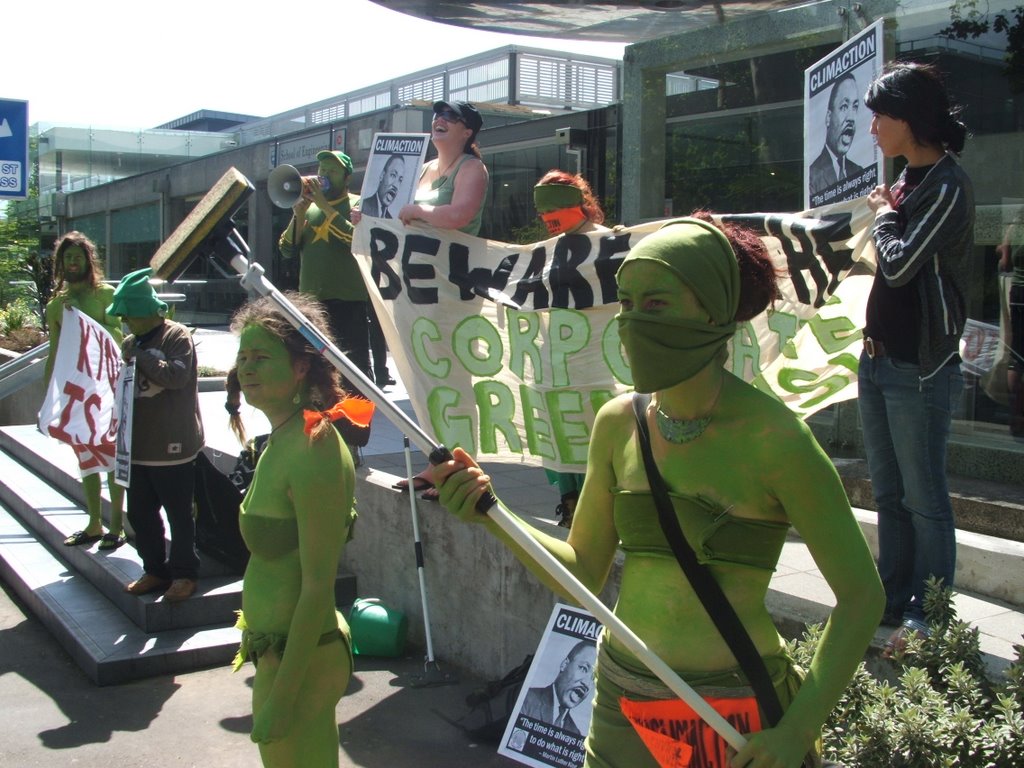
QUEEN ST TO BE BLOCKED BY HUNDREDS OF PROTESTERS IN ACTION INSPIRED BY MARTIN LUTHER KING


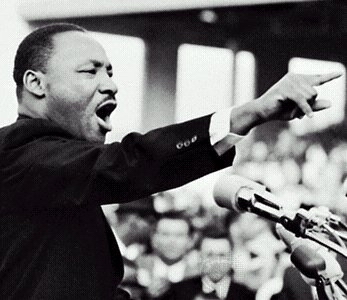
Martin Luther King- "Inspiration"


UNION LEADERS, POLITICIANS, SUPPORT CARNIVAL AGAINST CLIMATE CHANGE-
QUEEN ST TO BE BLOCKED BY HUNDREDS OF PROTESTERS IN ACTION INSPIRED BY MARTIN LUTHER KING

Union leaders and activists from across the political spectrum are supporting tomorrow’s Climaction Carnival Against Climate Change, that will block Queen Street to demand free and frequent public transport as a way of cutting Auckland’s greenhouse gas pollution.

Auckland Green MP Sue Bradford today wished the organisers of Saturday’s Climaction all the best for their rally in Queen St to mark International Climate Change Day on Saturday.

“Lack of action by Government and industry means it’s time for the whole community to come together to raise awareness of the need to take serious sustained action on the issue now, and to talk together about solutions that we will actually make happen.
“The time for ambivalence and inaction is past, and the Green Party welcomes support from all quarters for its longterm campaign to get New Zealand to fulfil its international and planetary obligations to ‘turn down the heat.’

Auckland Regional councillor Robyn Hughes sent an Open Invitation to other elected local body representatives urging them to join a ClimAction "civil disobedience" carnival and debate on climate change in the middle of Queen St. "ClimAction is adopting Martin Luther King's tactics of peaceful civil disobedience to promote public debate and action on climate change, which is the human survival issue of the 21st century," said Robyn Hughes.
"Taking over a section of Queen St for a few hours will spotlight the central problem of greenhouse gas exhaust fumes.

"To those who might say an elected councillor should always obey the road rules, I would reply: 'Tackling climate change so that humanity survives into the next century is more important than breaching some road rules for a couple of hours. Anyway, if more decisive measures on global warming aren't taken, Queen St may be under water in a generation or two, and then we will be swimming, not obeying road rules.'

"By forewarning people that a section of Queen St near
Aotea Square will be a no-go area for vehicles for several hours from 1pm on Saturday, 4 November, motorists can avoid holdups by choosing an alternative route.

"I was elected to the
Auckland Regional Council on the RAM (Residents Action Movement) ticket," said Robyn Hughes. "Over the last few years, RAM has been campaigning for 'free and frequent buses' across our region, a call that has been meeting with growing public sympathy. So I embrace ClimAction's call for 'free and frequent public transport'.

"And RAM supports ClimAction's call for 'system change, not climate change'. We must make radical social changes if humanity and other species are to survive the unprecedented chaos of climate change."

NDU National Secretary Laile Harre also wished the Climaction protesters well on the day-

As awareness of climate change grows, the kind of TINA (there is no alternative) thinking that gave neo-liberalism the upper hand in the 80s and 90s must not be allowed to shut down a debate among the worlds people around the fair and democratic management of limited resources. Economists and management consultants will tell us that only the market can tackle this crisis. After years of market-driven waste and inequality, giving the market the power to fairly allocate the atmosphere would be like getting the Managing Directors of Foodstuffs and Progressive to set the minimum wage.


Fala Haulangi, a unionist active with the SFWU’s CLeanstart campaign for cleaners, spoke of her anger that many Pacific Islands will be completely flooded within decades-
I fully support the International Climate Change Day on Saturday for the following reasons:
1. As a Tuvaluan who lives in New Zealand, global warming has always been a concerm for me and my people because Tuvalu and its people are going to be the first victim of global warming. In 50 years time Tuvalu is going to disappear from this planet. Not because of our choice. This makes me angry and very sad beause we are going to be the first environmental refugees and are forced to go somewhere else which is not the same as HOME.
2. As a union organiser for Service & Food Workers Union / Clean Start campaign we support Climaction because we need free and frequent public transport in Auckland as an environmentally responsible policy that will have major benefits for the working poor who rely mainly on buses and cannot afford a car.
If we are serious about saving the environment, then it is time for the whole community to come together and do something. Talking time is over, it is time for Action Now.


Mike Treen, Auckland Secretary for the Unite Union and a leading activist with Global Peace and Justice Auckland, also pledged his support-
It is welcome that the need to confront global warming is becoming mainstream common sense. What is disturbing is that the solutions being offered - taxes and carbon trading - offer no way forward and will penalise the poor.
Carbon taxes will increase the price of petrol which will be paid for by those using company cars but hit workers who lack adequate public transport. The obvious start is to have a massive increase in public transport available at little or no cost to the user. When that is in place we can think of taxes to encourage greater use not before.
While the World Bank estimates the value of the global carbon market nearly doubled from $11 billion in 2005 to $21.5 billion in 2006, there was no equivalent global increase in carbon emission reductions. In fact, they argue, as the carbon market has soared, global greenhouse gas emissions have continued to rise - a stark indication that a more
pragmatic and direct approach to cutting emissions is urgently needed.
These "market-based" so-called solutions only entrench existing problems, enrich the already rich countries and individuals while discriminated against the poor. We need an alternative that penalised the corporate polluters while protecting the poor. That will require democratic social and economic planning on a national and international scale - the world can't be left to corporate markets to fix.


Finally, Joe Carolan, a central organiser with the Climaction Coalition and a member of Socialist Worker, warned the powers that be that this would be the first of many Climactions over the next few months to spur them into radical action-
Äl Gore is meeting the business elite of Auckland on November 14th. We think big business is the problem, not the solution to climate change, and we will be organising a people’s assembly outside the Business School where he is speaking, challenging Gore to come and talk to the people and debate why need a massive system change to halt climate change. Kyoto and greenwashed capitalism is not enough- we need a revolutionary transformation of economic and political priorities with in a decade. We invite people to this assembly as a chance to debate with Gore what possible solutions are needed to the many problems he raises in his otherwise excellent film.

Monday, October 23, 2006

CARNIVAL AGAINST CLIMATE CHANGE!


Queen Street, Auckland
CARNIVAL AGAINST CLIMATE CHANGE
Civil Disobedience to protect people & planet
Aotea Sq, Saturday November 4, 1pm


4 November will see global protests demanding action to stop climate change. As an act of civil disobedience, ClimAction will hold a public debate and carnival in the middle of Queen Street. The carnival will go for several hours. Please bring banners, kids,friends, games, music, art, a picnic and your dancing shoes.

CLIMATE CHANGE- A threat to people & planet

Climate change is the greatest threat facing humanity today. The Earth’s climate is changing rapidly, because of uncontrolled economic activity. The three warmest years on record have all occurred since 1998. The Earthis warmer than it’s been in 1,000 years. Climate Change is caused by green house gasses, which trap the sun’s heating the atmosphere.Carbon dioxide (CO2) from fossil fuels like coal, oil and natural gas are the biggest problem. Methane from farm animals is also significant.

CLIMATE SCIENTISTS PREDICT
* Rising sea levels, flooding coastal areas, including parts of most NZ cities and many
Pacific Islands.
* Extreme weather patterns: more hurricanes, storms droughts and floods. Mass extinctions of plants and animals.
* Billions displaced by floods and famine. Wars over land and water.

FREE & FREQUENT PUBLIC TRANSPORT
ClimAction calls for free and frequent public transport, this will cut CO2 emissions.

KYOTO IS NOT ENOUGH
The Kyoto Protocol calls for small reductions in emissions. After 10 years most governments (including NZ), have done little. CO2 emissions have continued to increase here and around the world. That’s why ClimAction says Kyoto is not enough.

SYSTEM CHANGE, NOT CLIMATE CHANGE
CO2 emissions must be cut by 80% just to stabilise temperatures.This will require radical change. Corporate controlled economic systems stand in the way of these changes.They put short-term profit before the future of the planet. We face a choice between system change or climate change.

CLIMACTION is a broad group of activists who have come together to take action on Climate Change in Aotearoa. Inspired by the tactics of Matin Luther King's Civil Rights Movement, we believe the time has come to take to the streets to stop the destruction of our people and planet.

System Change Not CLimate Change is the Civil Rights movement of our generation

http://groups.yahoo.com/group/CLIMACTION/
http://www.climaction.blogspot.com

Sunday, September 17, 2006

Onehunga Community Picket a Big Success


WORKERS RIGHTS ARE HUMAN RIGHTS-
SUPPORT THE SIX HUNDRED!

Onehunga Community informational picket and
collection for 600 Locked Out workers
entering fourth week of lockout.

Fighting union busting and the attempt by a multinational
to starve them back to work.
More info at-
www.shelfrespect.org


Just to let people know the picket was great. Comrades from Socialist Worker, the local Latin American Community Centre, Radical Youth and Luke from the NDU faced up to an early call of "'ll get the police on you- this is private land" and "You guys are too young to be in a fucking union" by a visibly disturbed fat, old, bald and grumpy store manager. We told him to go call them, telling him we would contact Councillor Robyn Hughes across the bridge, and have it out as to who owned the footpath.

IN the meantime we distributed over a thousand leaflets explaining what the lockout was about, with the 0900 number for donations. We collected $270 in donations in the Workers Charter bucket, giving every contributor a copy of the new paper with the No Surrender cover and the big centre spread jammed with pictures and workers voices. The cops came, but knew the manager had no leg to stand on. An imaginary line about a metre from Foodtown's entrance became the new demarcation line between public and private space, and a lot of checkout workers laughed as the manager became even more irate. We stayed on for another half hour, before going up to the picket in Favona and giving the bucket of cash into Big Joe and the welfare crew up at Progressive's gates.

The genorosity of Foodtown shoppers is amazing, and their disgust at the company is palpable. Many told us they would switch stores for the duration of the lockout. Community pickets can help win people to the boycott, spread good info about the strike and raise sorely needed funds and support for the workers. I'd recommend any crews out there to get one on as soon as possible.

Kia kaha
Joe C
Solidarity Union
www.solidarityunion.com

Thursday, September 07, 2006

No Surrender! Victory to the New Unionists


by Joe Carolan

NO Surrender! is the battlecry on the picket lines of Auckland , Christchurch and Palmerston North, as 600 brave workers from the NDU defy Australian owned multinational Progressive's attempts to smash their union. And the stakes are high-

""In Auckland , the picket lines have been really staunch" said NDU organiser and Workers Charter supporter Luke Coxon. "Although the company is trying to starve the workers into submission, they are resolute and determined to fight on. What started off as a 48 hour stoppage in pursuit of one national agreement and equal pay for the same work done in all cities, turned into a Lockout when Progressive issued suspension notices. They said workers could only return to work if they submit to company demands, which now are attacking conditions already won. This is a huge showdown between Capital and Labour in this country, and the outcome will have a huge effect on all unions power and confidence for years to come. And people throughout Aotearoa know this".

"There has been massive solidarity from other workers and left organisations. Over $50,000 dollars has come in in donations in the last week, and trade unionists from MUNZ, Unite, the SFWU, the EPMU, the RMTU, SolidarityUnion and many many more have stood shoulder to shoulder with us. The honking of cars in support never stops. The community drops off food and other donations. There is huge public support for us and people want to see us win".

"Flying pickets have turned trucks away and confronted scabs, defying police and management intimidation. Customers leafleted have been overwhelmingly positive, with many boycotting Progressive stores and shopping elsewhere for the duration of this struggle. Most stores are now losing $55,000 a day- this is costing the company millions. And supermarket workers have been amazing- they see through the attempts by management to drive a wedge between their pay campaign and the distribution workers."

"The company was only offering NDU supermarket workers a derisory 2.6% this year. Union members voted to campaign for 7%. And they are holding strong, despite company attempts to bust the union by offering non union members pay rises, and threatening any supermarket worker who takes action with suspension and lockout".
The 2006 Lockout is shaping up to be this generation's 1951, as a decisive battle is fought between big business and the emerging, militant new unionism that has swept across Aotearoa in the last few years. Workers Charter wants to see our side win.

Boycott Progressive stores- Foodtown, Countdown and Wollworths.
Make a $20 donation by phoning 0900 5625 688 (0900 Lockout).
Support the picket lines and the flying pickets. Bring food and koha.
Victory to the NDU and the new Union movement!